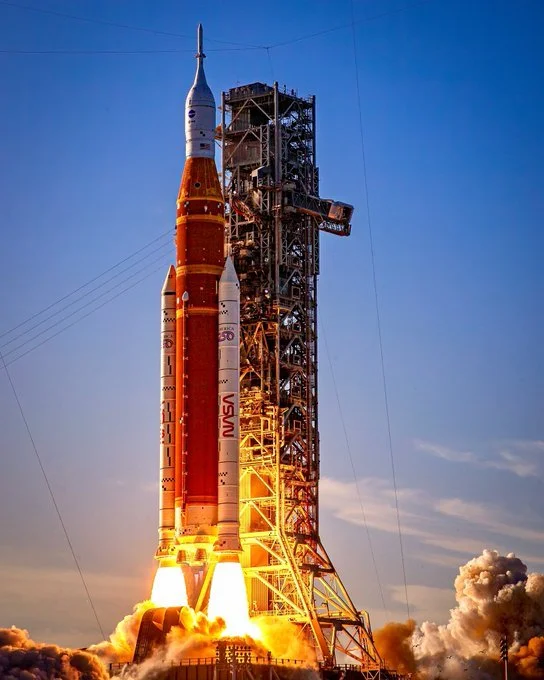
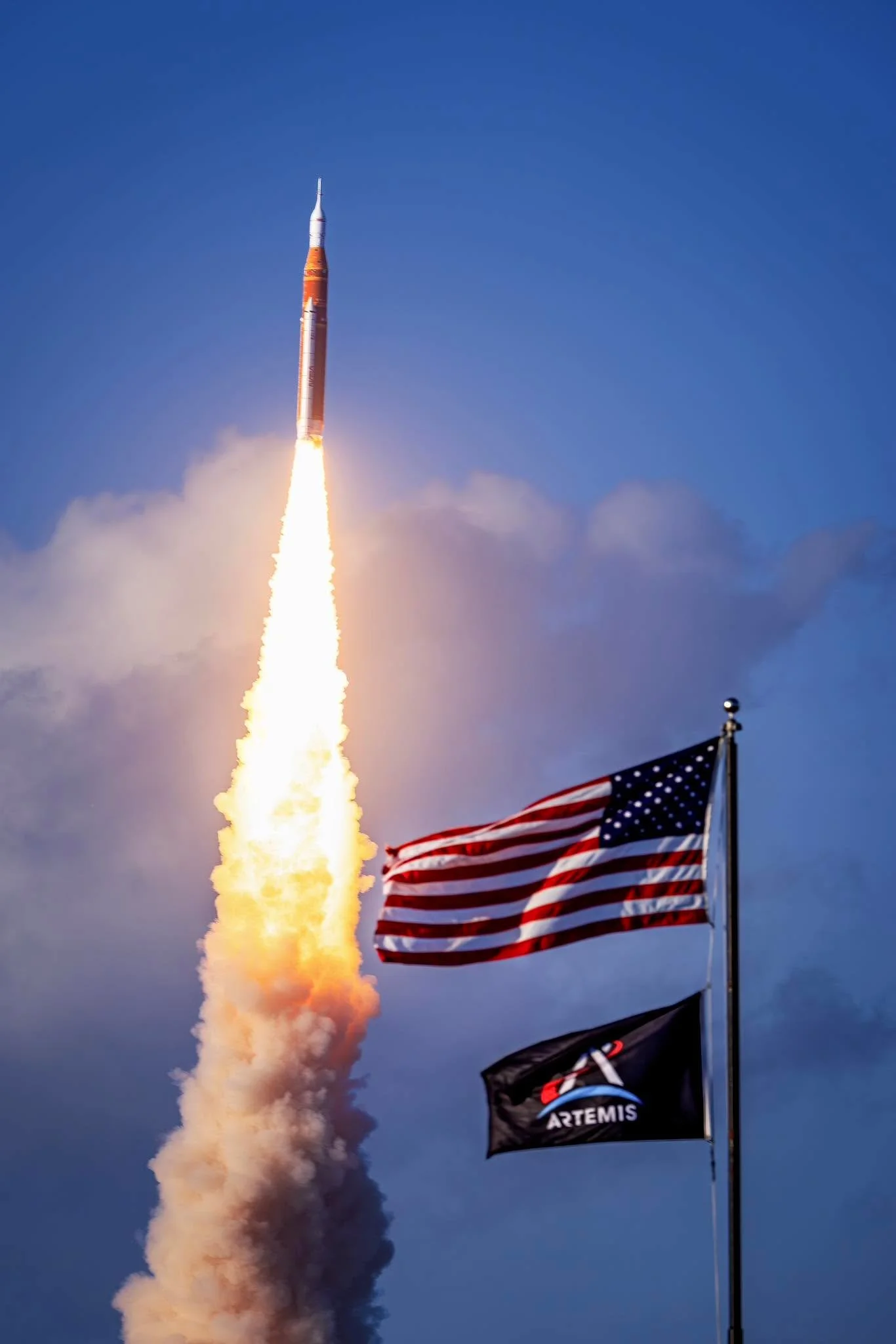
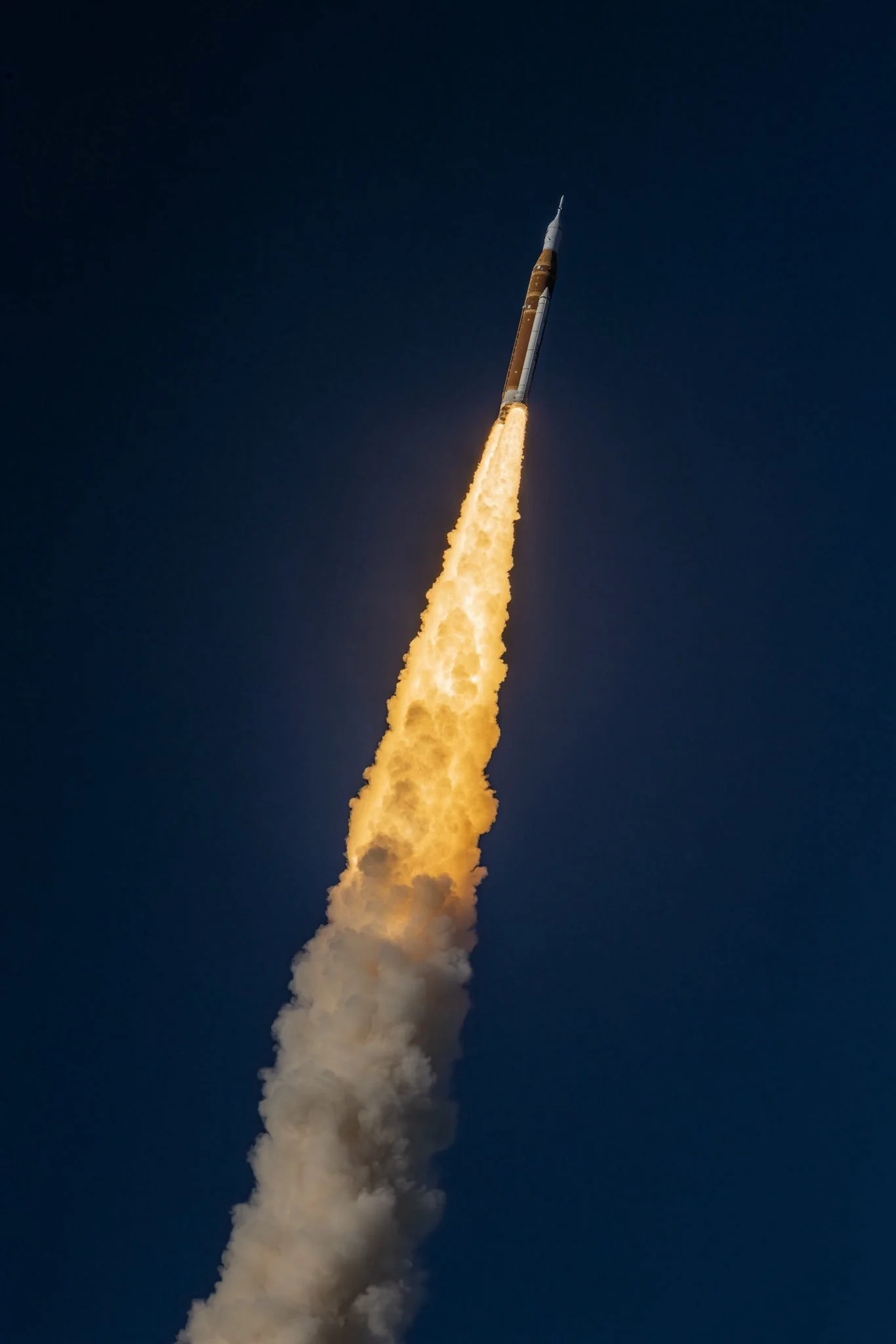
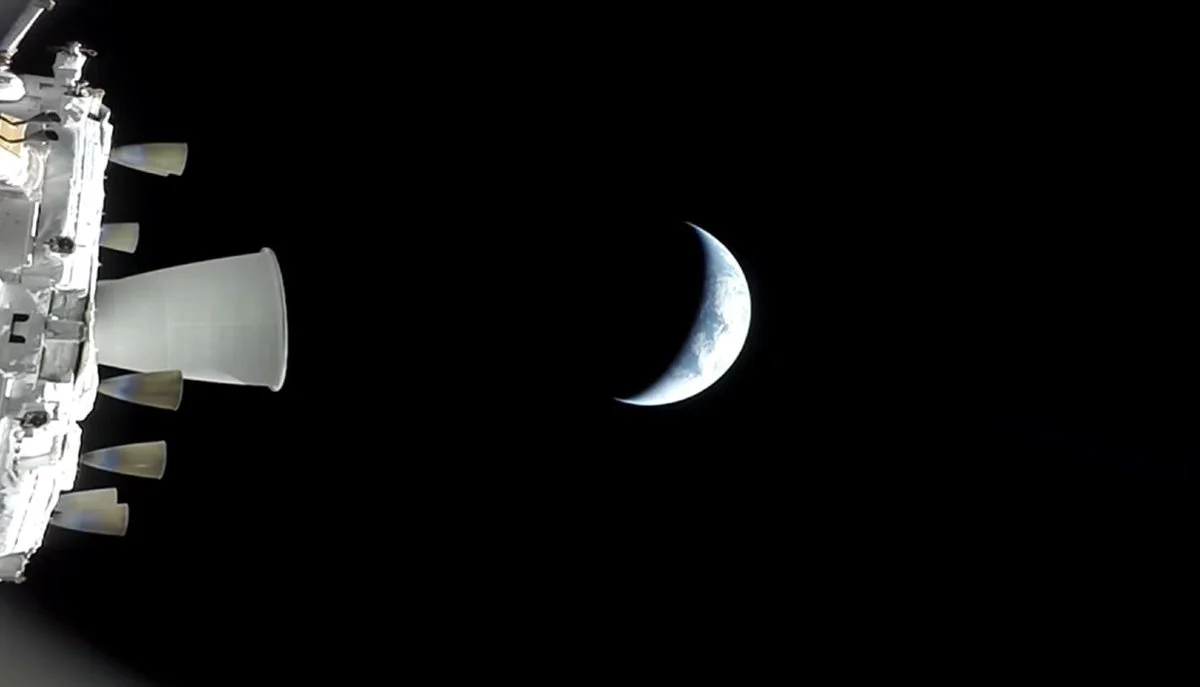
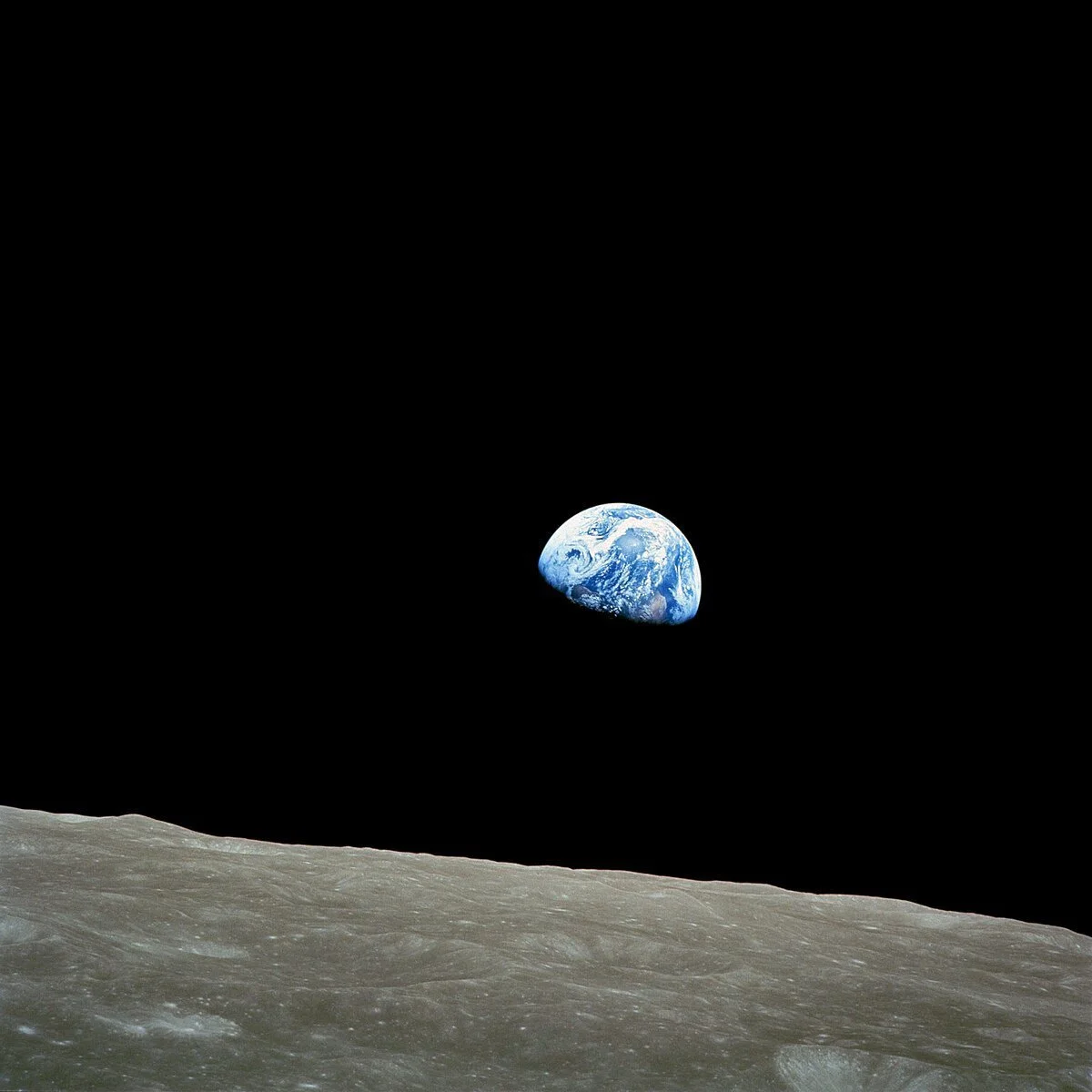
Jim Lovell: “The vast loneliness is awe-inspiring and it makes you realize just what you have back there on Earth."
Earthrise, captured on Christmas Eve 1968 during Apollo 8, remains one of the most captivating and enduring images in history.
Jim Lovell: “The vast loneliness is awe-inspiring and it makes you realize just what you have back there on Earth."
Earthrise, captured on Christmas Eve 1968 during Apollo 8, remains one of the most captivating and enduring images in history.
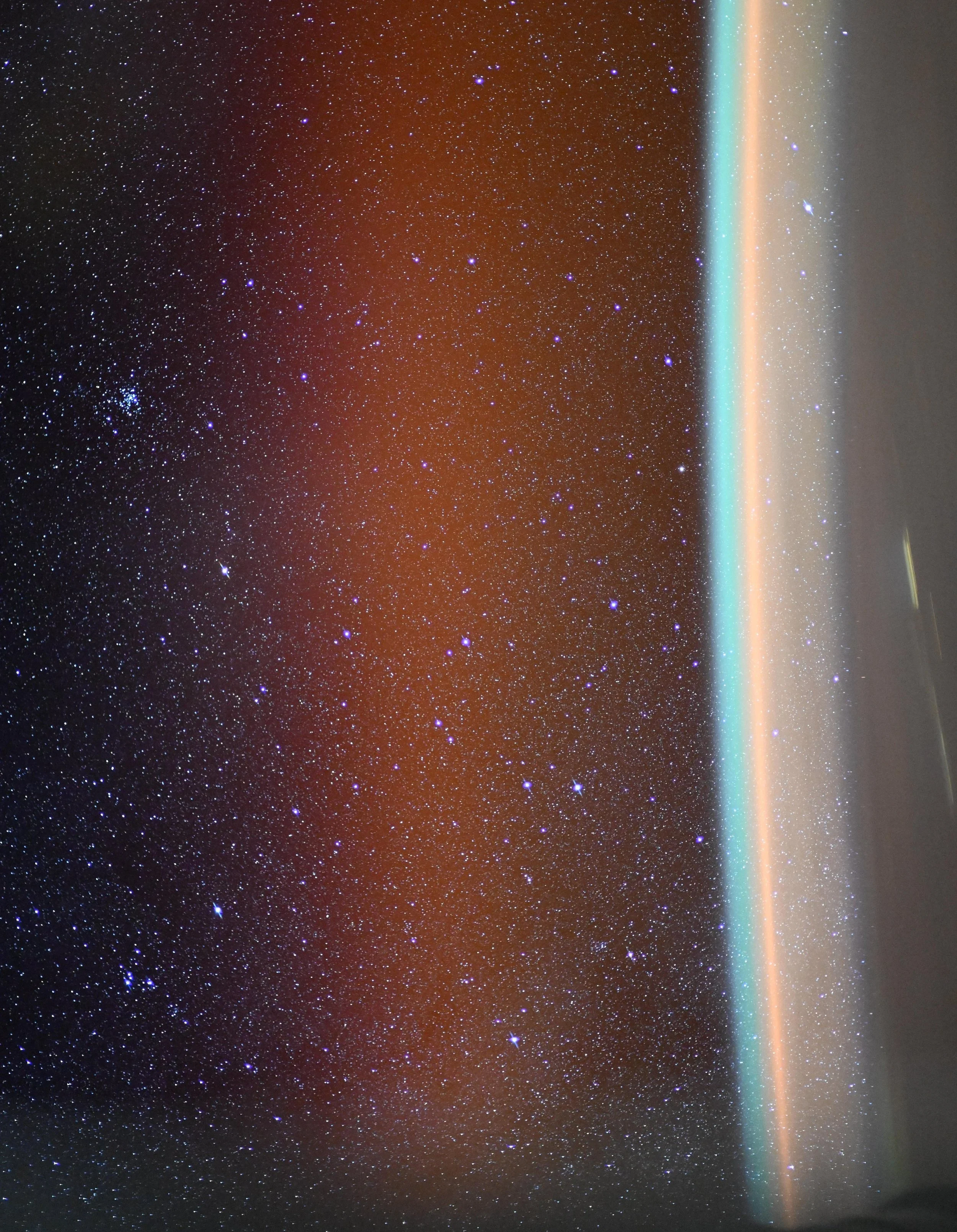
Absolutely gorgeous capture of Earth’s atmosphere from the ISS, courtesy of astronaut/astrophotographer Don Petit.
“The colors of our atmosphere seen from space! Multiple vibrant layers of green atomic oxygen, orange hydroxyl radicals, and red airglow excited from solar activity.” Source
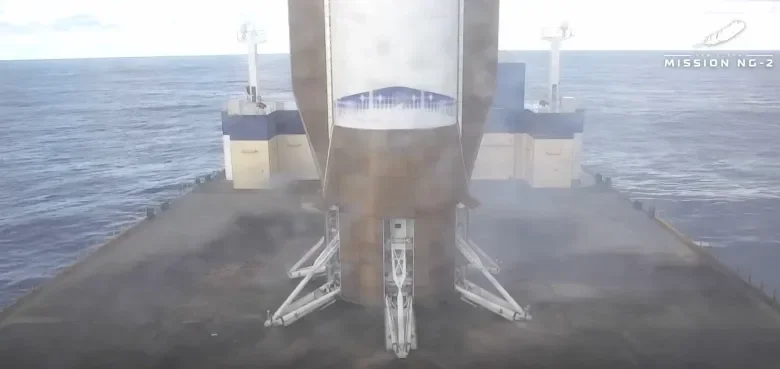
Fantastic launch (and landing) today by Blue Origin - there's another reusable rocket on the table.
Blue Origin's New Glenn rocket, in its second official launch, sent NASA's ESCAPADE mission on its way to Mars. The Escape and Plasma Acceleration and Dynamics Explorers (NASA makes such great acronyms) mission will use two small satellites (built by another private space company, Rocket Lab) to study space weather conditions at Mars.
In only its second try, Blue Origin executed a perfect landing of New Glenn's booster on their drone ship, "Never Tell Me The Odds."
As awesome as SpaceX's achievements are, we need MORE private space companies doing amazing things, so Blue Origin's success today is great news. Like SpaceX, Blue Origin will be headed to the moon as part of Artemis, and they have grand plans for orbital stations and beyond.
Learn more about the launch today here.
Image Credit: Dave Limp (link) and Blue Origin.
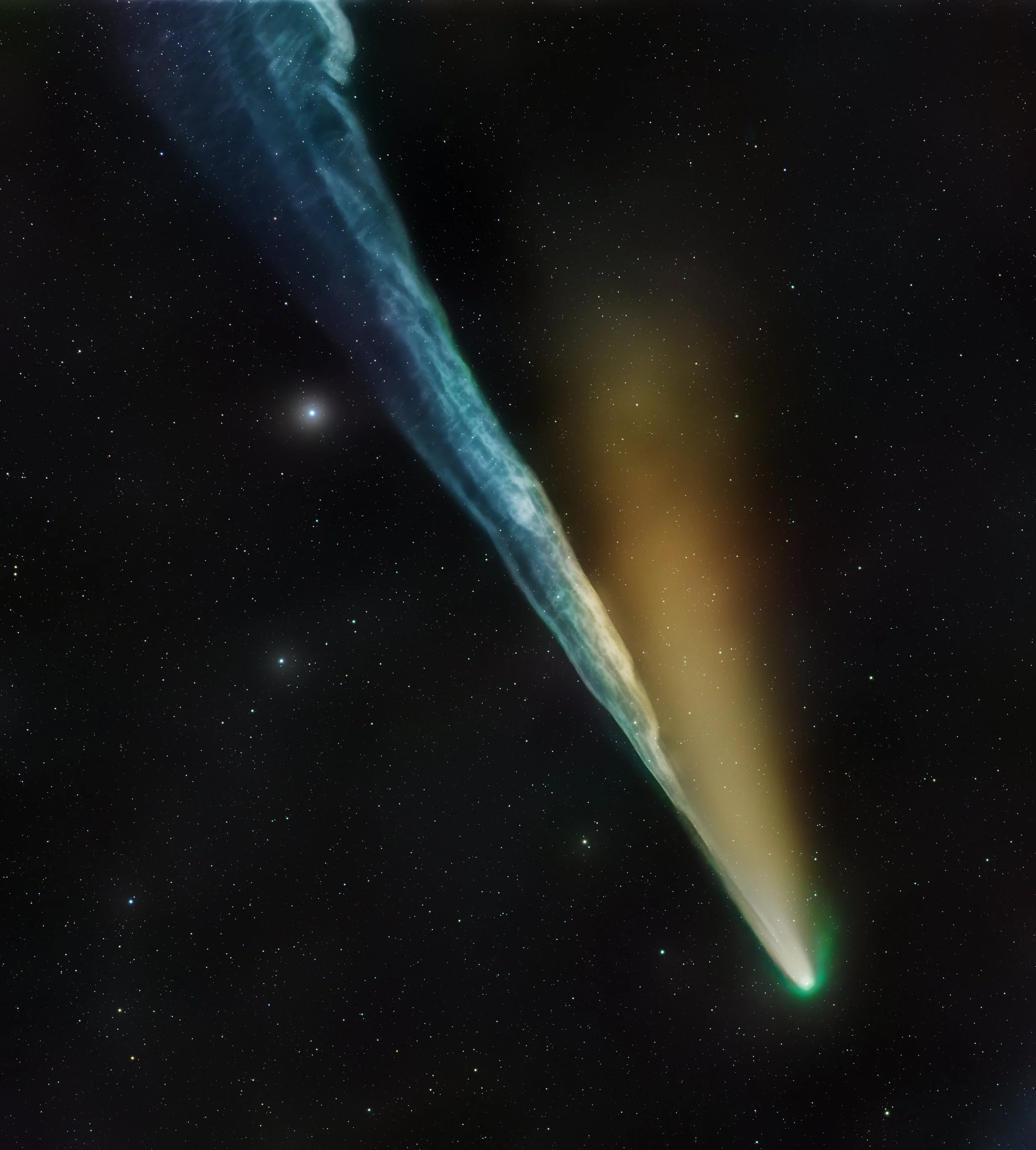
Check out this stunning image of Comet C2025 A6/Lemmon (what a mouthful) captured by astrophotographer Andrew McCarthy. Note, this isn’t our current interstellar visitor, but a different comet that’s puttings on quite a show this week.
Source: https://x.com/AJamesMcCarthy/status/1982601788621803521
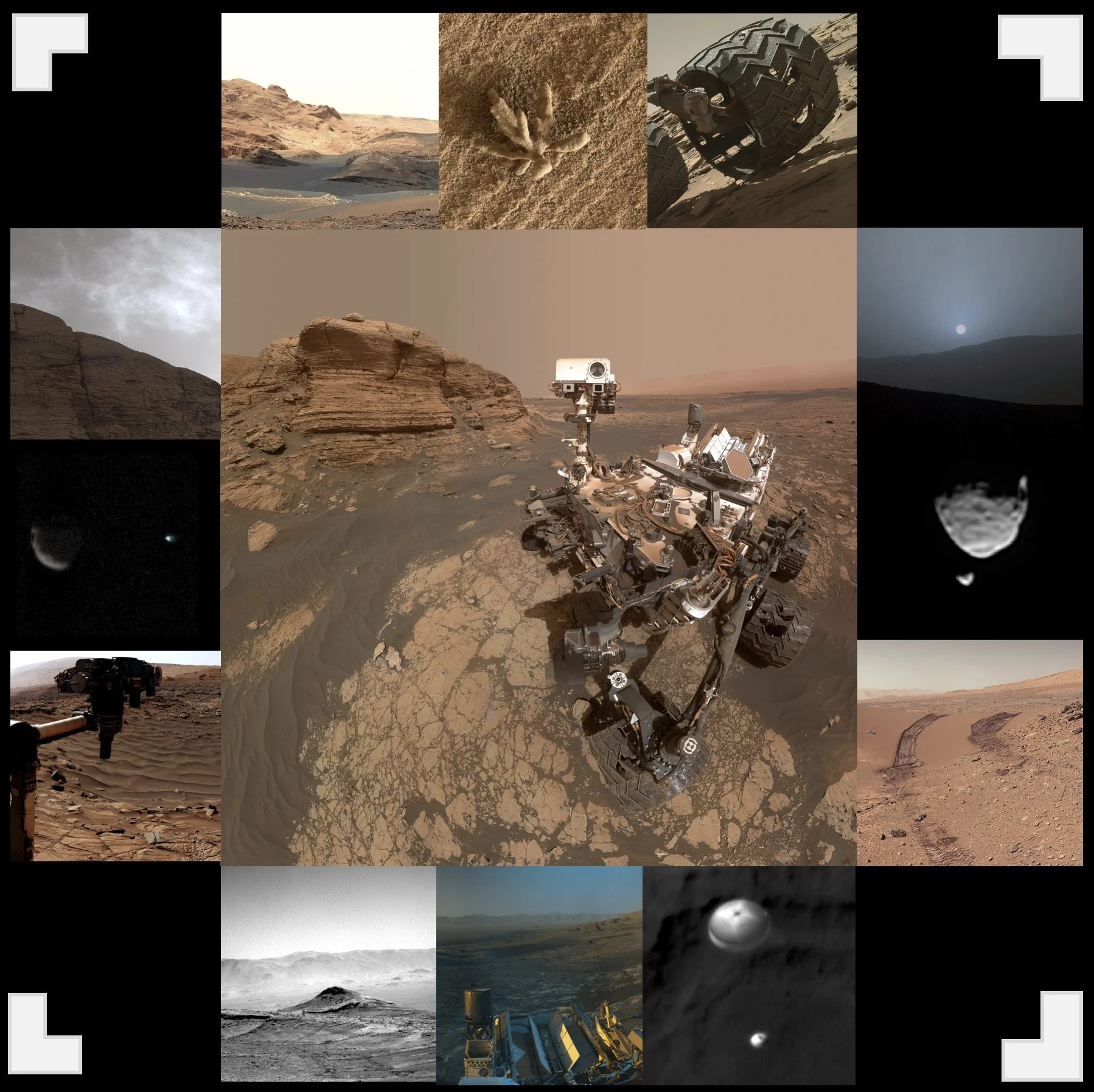
13 years ago this week, Curiosity landed on Mars and began an incredible journey of exploration that is still going strong. NASA put together a collage of 13 of Curiosity’s most memorable images so far.
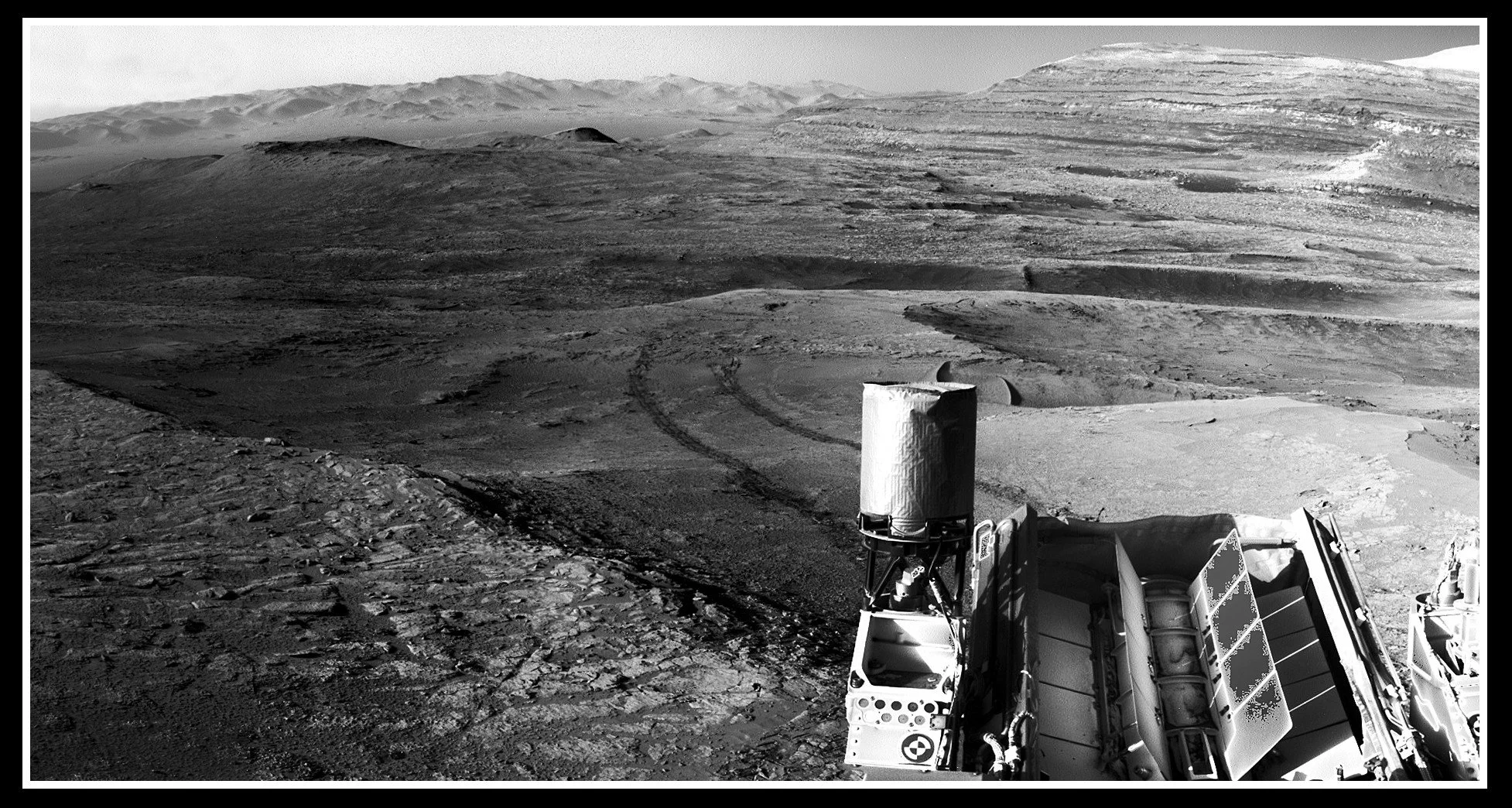
Incredible new image from Curiosity this week, taken from the slopes of Mt Sharp, looking over her shoulder at the floor, and distant rim, of Gale Crater.
Credits: NASA/JPL-Caltech/S Atkinson. Source
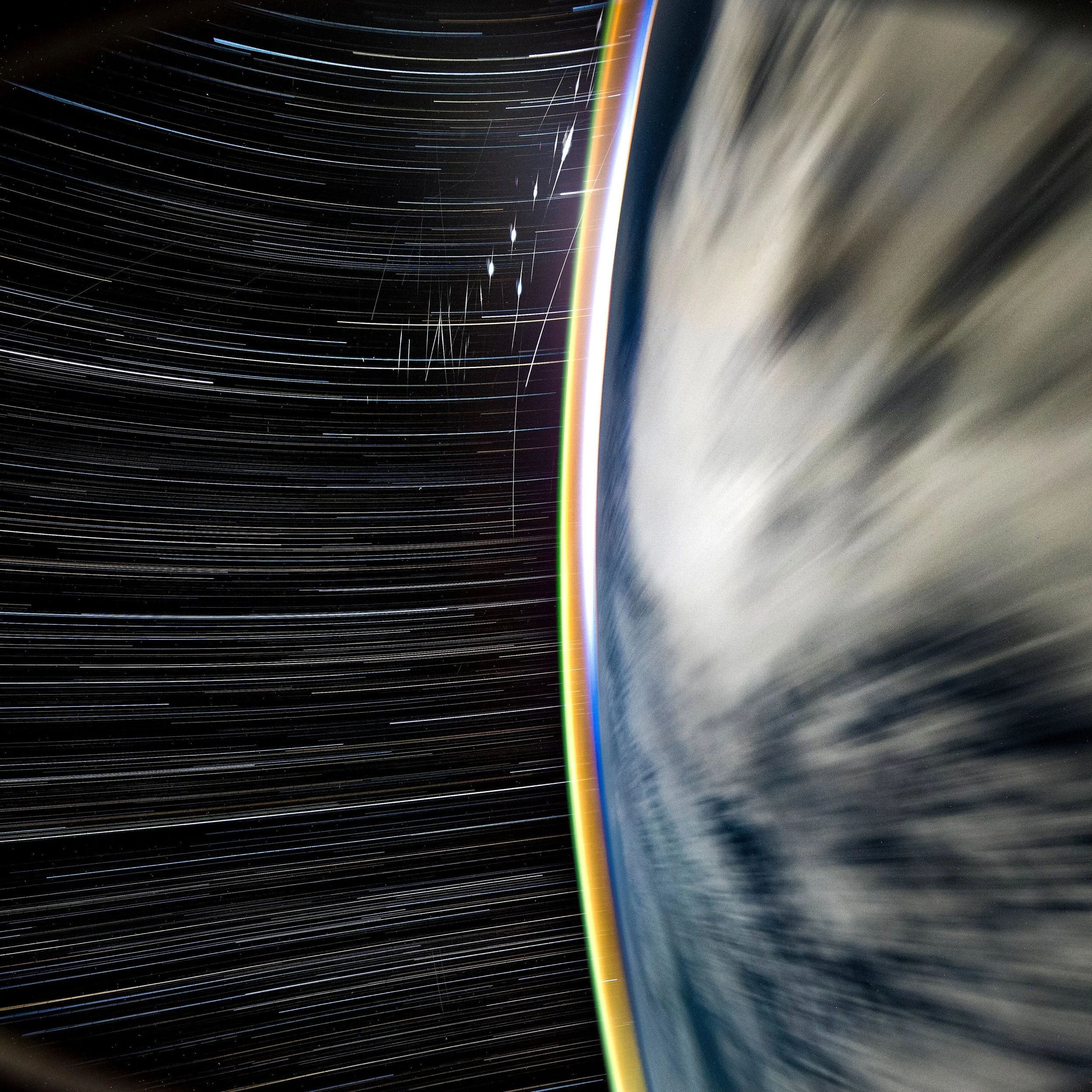
Astronaut Don Petit is back on Earth now, but while he was on the ISS, he took thousands of incredible pictures and videos from orbit, and many of them are only now being catalogued and shared. Visit his X feed regularly to see a constant stream of beautiful images.
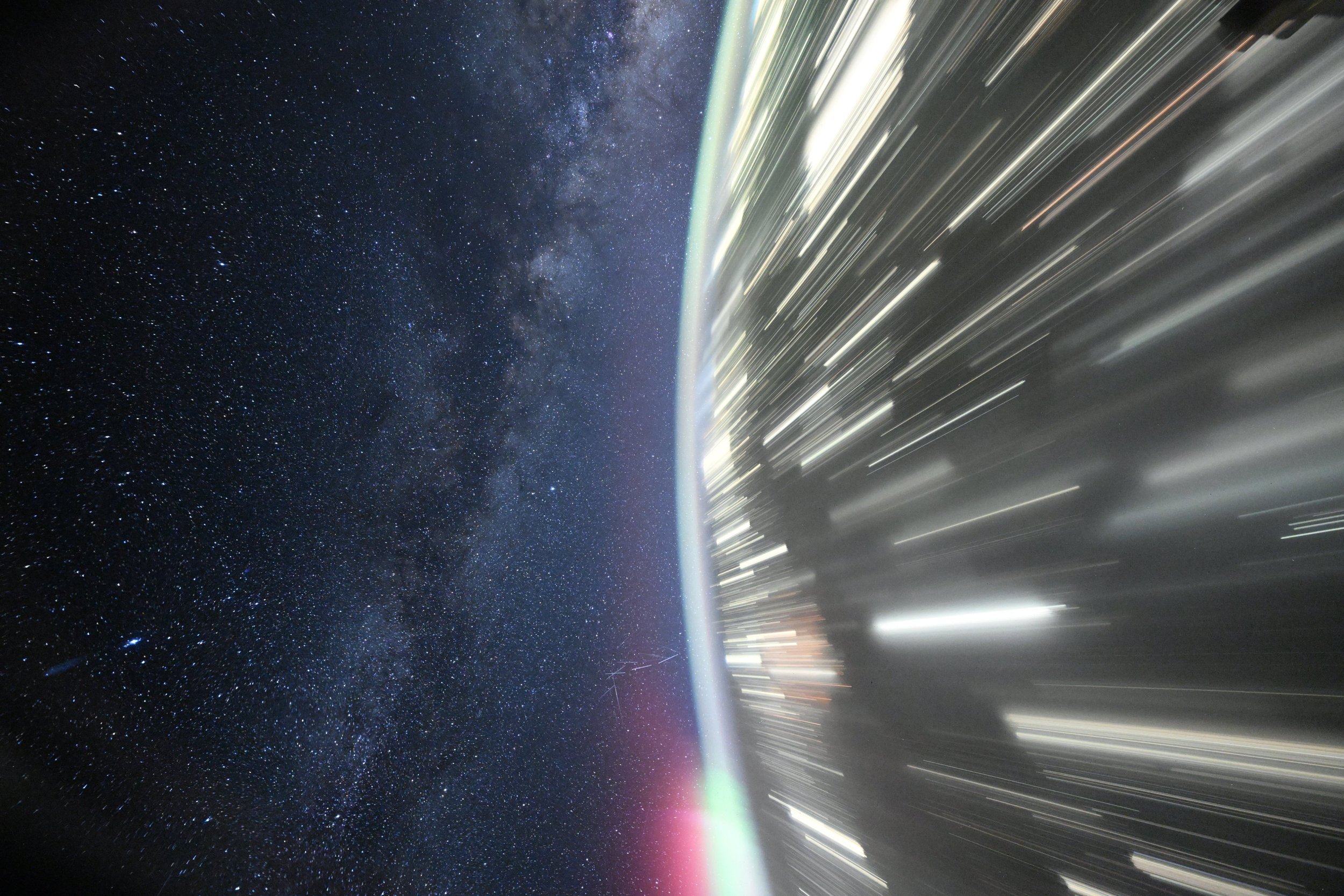
In his words: “High resolution star trail from the SpaceX Crew 9 Dragon, marked by a fleet of flashing Starlink satellites, glowing atmosphere, soon to rise sun, and arcing stars. Captured over the Pacific Ocean with Nikon Z9, Sigma 14mm f1.4 lens, effective 24 minute exposure compiled from individual 30 second frames, f1.4, ISO 1600.”
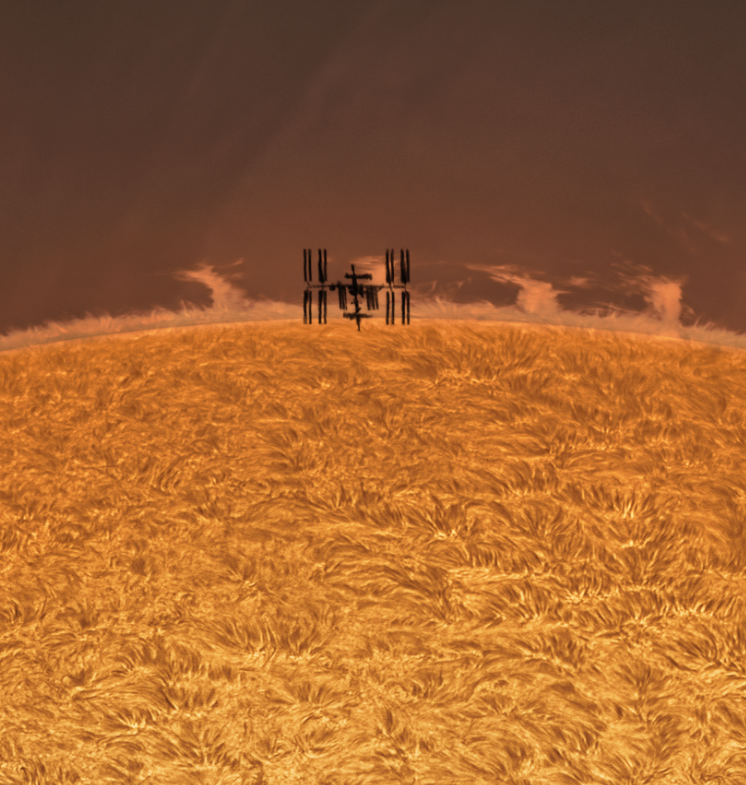
Ace astrophotographer Andrew McCarthy captured a banger of a photo of the ISS against the sun recently (see it here). Now he’s released an incredible bonus shot from the session. This is one hell of an optical illusion!
P.S.: The title of this post is a reference to a quirky but excellent 2007 movie, “Sunshine,” about a team of astronauts sent on a mission to reignite the dying Sun with a nuclear fission bomb.
This stunning visual was created by NASA, the Curiosity rover, and photographer Damia Bouic.
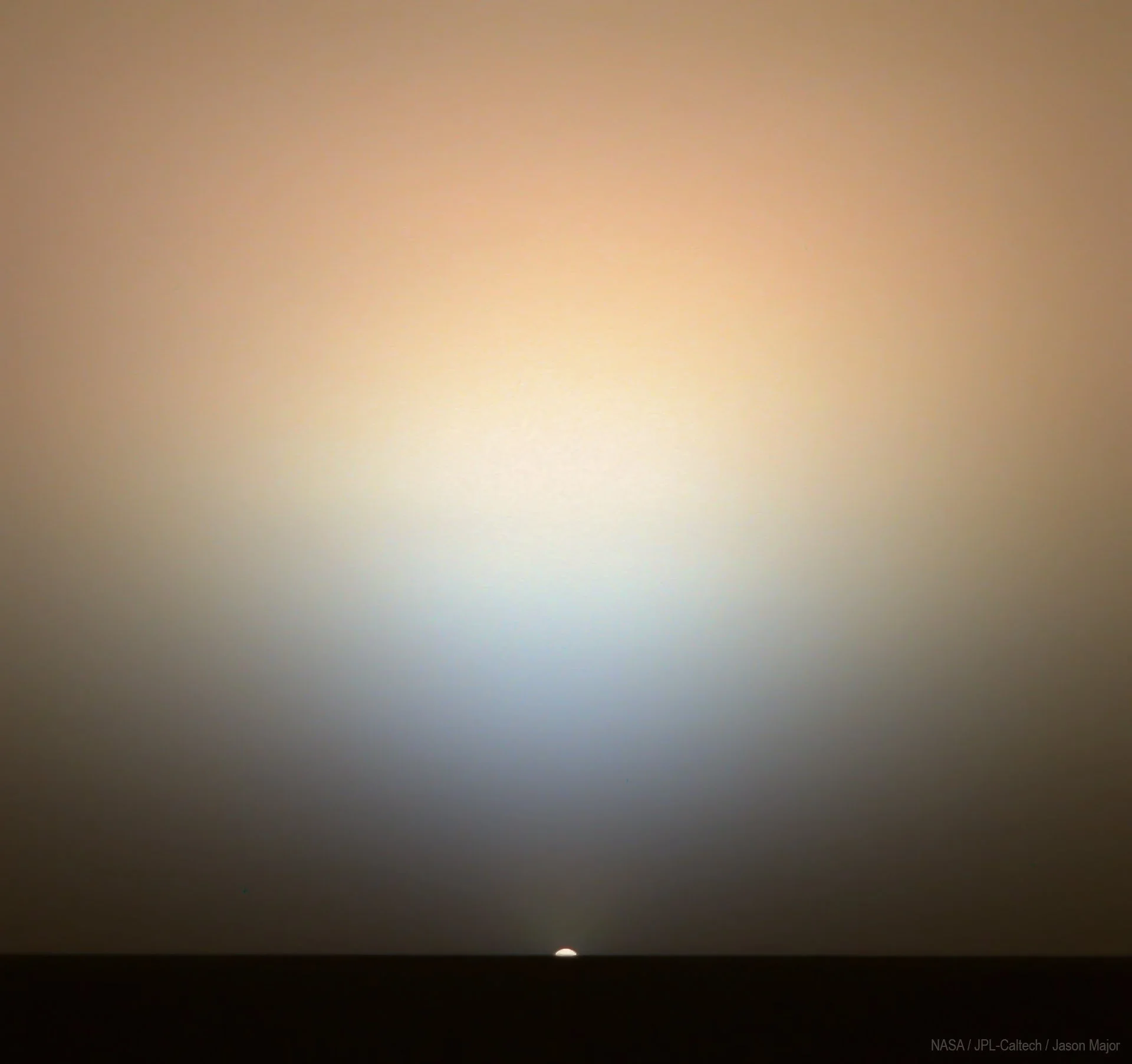
The Sun appears slightly smaller from Mars than from Earth, since Mars is 50% further from the Sun than Earth. More striking, perhaps, is that the Martian sunset is noticeably bluer near the Sun than the typically orange colors near the setting Sun from Earth. The reason for the blue hues from Mars is not fully understood, but thought to be related to forward scattering properties of Martian dust.
The terrestrial sunset was taken in 2012 March from Marseille, France, while the Martian sunset was captured in 2015 by NASA's robotic Curiosity rover from Gale crater on Mars.
On Thursday, Elon Musk shared SpaceX's plans for Mars over the next 8 years (and a permanent moon base, since it's on the way ) - and beyond, to make humanity a multiplanetary species.
It is ambitious, perhaps even audacious. But the suite of technologies Elon has built are, it turns out, all positioned to make this a reality. Rockets, robots, autonomous and hardy vehicles, tunnel diggers, a space-based communications system, battery packs, cutting-edge astronaut suits...it's almost like he had a plan all along.
There will be challenges and setbacks along the way, but I am so here for this.
- First Starship to Mars planned for 2026
- Enlarging future generations of Starship
- Mars settlement in 2030s
- Robotic + human labor used
- Moon Base in planning
- 100s of Mars landings
Here’s the link to the entire presentation, if you'd like to watch it: https://x.com/SpaceX/status/1928185351933239641
I am obsessed with this grainy image snapped by Percy on Mars. It’s quiet and contemplative, haunting and lonely, yet stirring to life the string that tugs at your soul and whispers of your connection to a vast cosmos.
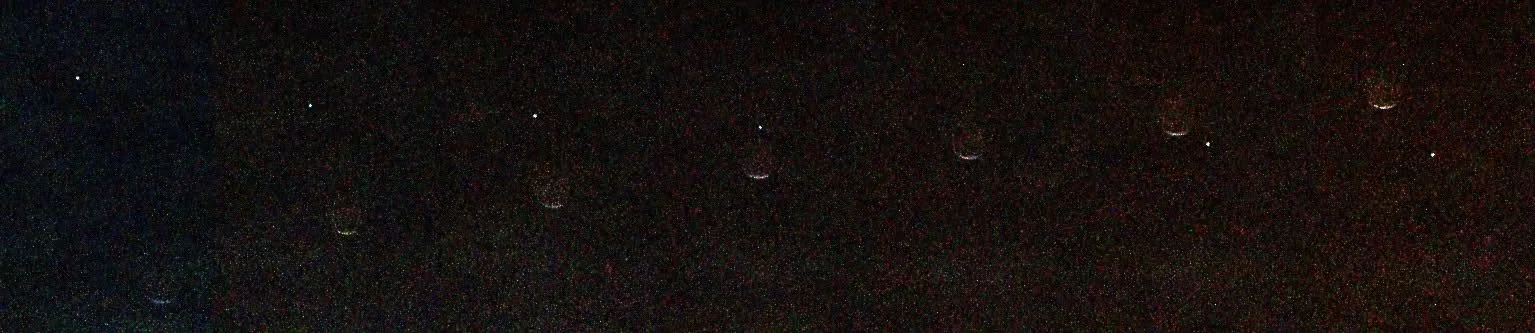
From the Perseverance X account: “That bright "star" is actually Mars' moon Deimos. In the hours before dawn, I snapped this long-exposure image with my left Navcam and caught Deimos as well as two stars from the constellation Leo in the sky. It's definitely a mood, as they say.”
Original post here.
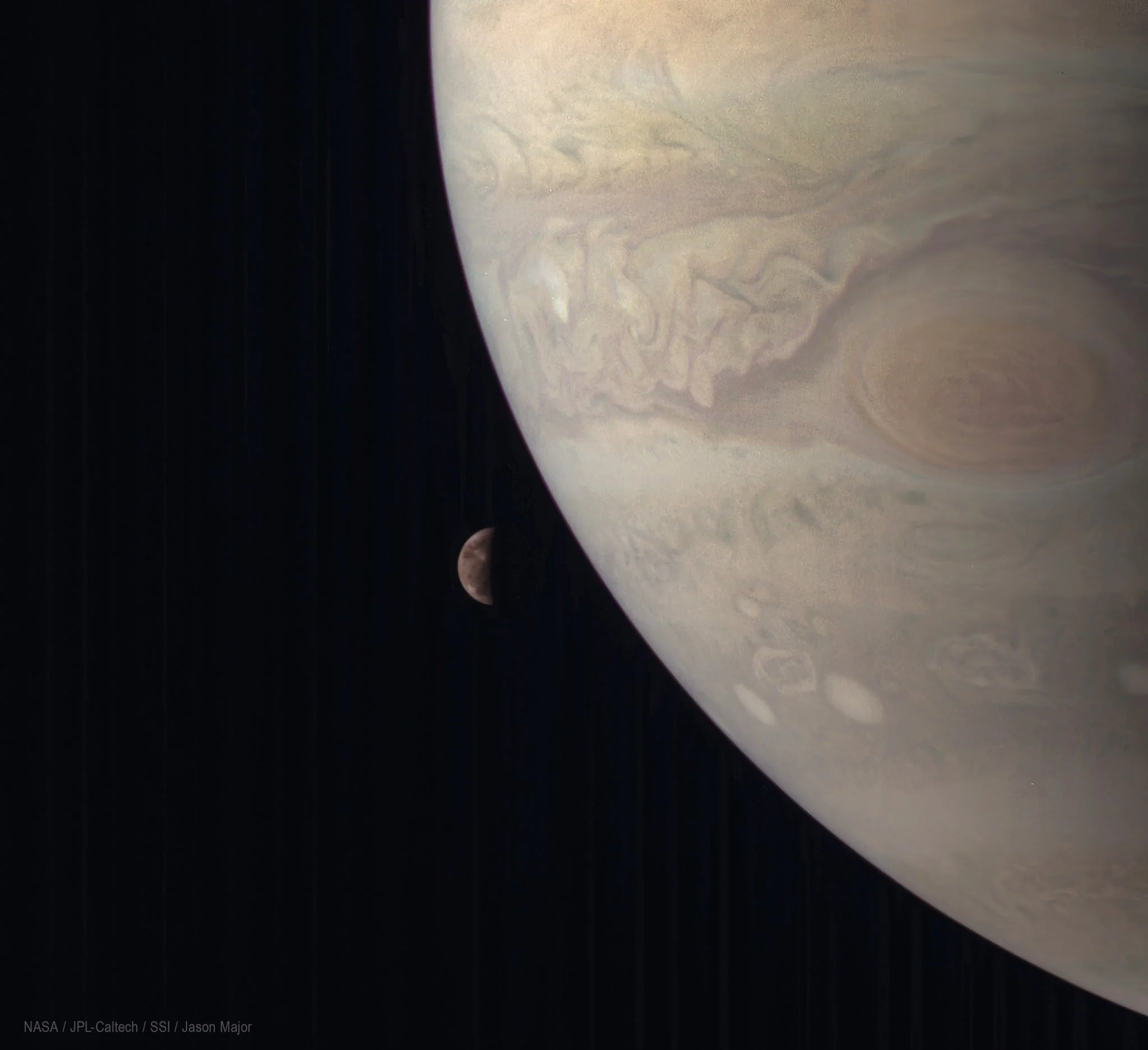
What a remarkably clear, crisp image by JunoCam. It was taken on Jan. 28th, during its 69th flyby of Jupiter. Cassini will always (probably) be my favorite, but Juno has delivered some truly incredible images.
You can download it in high resolution here.
On March 16, Firefly Aerospace’s Blue Ghost lunar lander completed its mission as lunar night arrived. It was a spectacular success in every sense and marks a new era for commercial space missions.
As the craft shut down, it sent one final message home.
Don't worry, Blue Ghost. You'll have plenty of friends - human and robotic - to keep you company soon.
That’s one heck of a selfie, Athena!
This image is from the Intuitive Machines Nova-C “Athena” lunar craft, which is currently headed toward the moon for a scheduled March 6 landing.*
* Wholly incidentially, with a digital recording of three of my short stories, Venatoris, Re/Genesis and Chrysalis, on board (along with hundreds of other stories, novels and art). I am super excited!
Blue Origin was successful on its first test launch of the New Glenn rocket! Official statement:
“New Glenn safely reached its intended orbit during today's NG-1 mission, accomplishing our primary objective. The second stage is in its final orbit following two successful burns of the BE-3U engines. The Blue Ring Pathfinder is receiving data and performing well. We lost the booster during descent. We knew landing the first stage on the first try was ambitious. We'll learn, refine, and apply that knowledge to our next launch in the spring. We're thrilled with today's outcome.”
Learn more here: https://www.blueorigin.com/news/new-glenn-ng-1-mission
Two of my short stories, APOGEE and SOLATIUM, are trying for the moon again! Overnight, Firefly Aerospace's Blue Ghost lander launched aboard a Falcon 9 rocket carrying (among numerous NASA and commercial payloads) the Lunar Codex, Samuel Peralta's passion project, a beautiful collection of stories, art, music and more. I am honored beyond words to have my these stories reach the stars and find a home on the moon!
It'll be a little while before Blue Ghost attempts a lunar landing, however. It will spend the next 25 days in Earth orbit, undergoing a variety of systems checks and gathering data. It will then conduct an engine burn and hopefully reach the moon 4 days later, where it will orbit for 16 days before attempting a touchdown in Mare Crisium.
If the landing is successful, Blue Ghost will deliver the Lunar Codex to its home on the lunar surface. Then it spend 2 weeks capturing imagery of the lunar sunset and provide critical data on how lunar regolith reacts to solar influences during lunar dusk conditions, before retiring with the lunar night.
This might be the most beautiful photograph ever taken from the ISS. Snapped by astronaut Don Petit this weekend, it features the Milky Way, Zodical light, Starlink satellites as streaks, stars as pin points, the atmosphere on edge showing OH emission as burned umber, the soon to rise sun, and cities at night as streaks - all in one image.
Source: https://x.com/astro_Pettit/status/1878900589238923290
Five years ago, at the dawn of 2020 (not forseeing the crisis that awaited us in a mere two months), I made the following predictions (and asked for your thoughts on Facebook):
We're in the 2020s now, and this had damn well better be the decade where some mind-blowing technological advances happen. With that in mind--
Which of the following do you think we are MOST LIKELY to have in 2030:
(1) A fully functioning lunar base, where astronauts live and work on the surface for 6+ months at a time and (rich) tourists visit.
(2) Boots on Mars, and not the robotic kind.
(3) Effective anti-aging/life-extension medication or treatments - not to make us immortal (yet), but to extend our *healthy* lifespan well into the 100s.
(4) Practical brain-computer interfaces - chips in our brains, or at least subcutaneous/on-skin hardware that communicates with our brains.
(5) Discovery of microbial alien life in our solar system and/or confirmation of a clear technological signature (advanced alien life) out there.
5 years later, #1, #2 and #5 (microbial) are looking reasonably likely to be achieved by 2030. #3 and #4 are moving a little more slowly, but I’m hopeful we’ll see the beginnings of them within a decade.
You know what wasn't on this list of mine? Artificial General Intelligence. Leaving it off * might * have been an error on my part....
From NASA / Astronomy Picture of the Day:
“If you could stand on Mars -- what might you see? You might look out over a vast orange landscape covered with rocks under a dusty orange sky, with a blue-tinted Sun over the horizon, and odd-shaped water clouds hovering high overhead. This was just the view captured last March by NASA's rolling explorer, Perseverance. The orange coloring is caused by rusted iron in the Martian dirt, some of which is small enough to be swept up by winds into the atmosphere. The blue tint near the rising Sun is caused by blue light being preferentially scattered out from the Sun by the floating dust. The light-colored clouds on the right are likely composed of water-ice and appear high in the Martian atmosphere. The shapes of some of these clouds are unusual for Earth and remain a topic of research.”
Comet Tsuchinshan Atlas (A3), captured by talented astrophotographer “Astrofalls.” I tried to get a far, FAR inferior picture of the comet the last two nights, but fall and the overcast weather it brings have finally descended upon Coeur d’Alene.